
Intimate discomforts
Damage to the skin barrier as a cause of intimate discomfort
From microtears to deep wounds
The intimate skin is delicate and sensitive. Therefore, discomfort in the intimate area can arise even from tiny, superficial damages to the skin barrier, as well as from deep injuries, surgical wounds, or scars.
Intimate Discomfort: The Cause of Dry Intimate Skin
When discomfort in the intimate area occurs repeatedly, it is often because the intimate skin is too dry, making it rough and prone to cracking. As a result, it reacts with burning, itching, irritation, redness, swelling, and/or pain. At the same time, it loses its resistance to external irritants (see below). These can further damage and dry out the intimate skin, causing the discomfort to persist stubbornly or even worsen.
Examples of external influences that the intimate skin is frequently exposed to in everyday life:
- Mechanical Stress: Tight underwear/pants, panty liners, prolonged sitting, sports (cycling, horseback riding, etc.), intimate shaving, or waxing.
- Chemical Irritants: Contact with urine or stool, unsuitable products for intimate hygiene, too much or too little intimate hygiene, scented toilet paper.
Fat Deficiency in the Intimate Skin Causes Discomfort
The surface of the intimate skin forms the stratum corneum, a contact surface between the body and the outside world, structured like an impermeable brick wall: closely packed keratinized cells form the bricks, and the intercellular substance (cellular matrix) forms the mortar, which consists of about 80% fat. When fat is deficient, the architecture of the stratum corneum is destroyed (see diagram). Medically, this is referred to as a disturbed skin barrier, recognizable by a dry, rough, and cracked skin surface. A fat deficiency in the stratum corneum causes the intimate skin to become dry, rough, and cracked, losing its resilience. As a result, discomfort in the intimate area occurs.
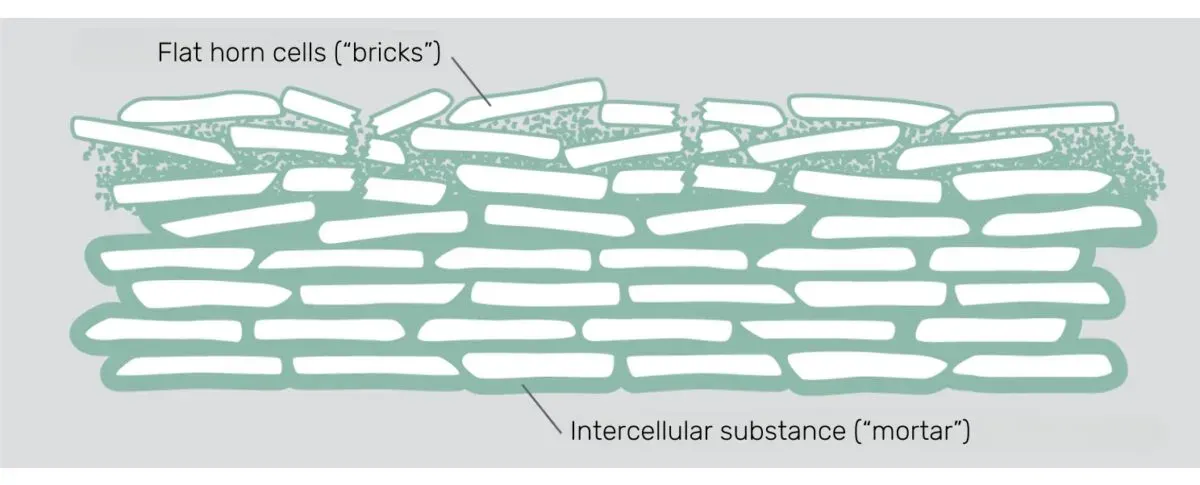
Although a disturbed skin barrier only involves superficial microtears, the intimate discomfort they cause can be very distressing. Improper intimate hygiene can also dry out and roughen the intimate skin, as can the hormonal changes that occur when a woman enters menopause.
Intimate Discomfort: Causes of wounds and scars
In addition to tiny, superficial damages to the skin barrier, injuries, surgical procedures, or other treatments that cause wounds are common causes of discomfort in the intimate area. The typical wound pain, which can be significantly aggravated by sitting, walking, or contact with urine or stool, is central to this discomfort. If thick, firm scars remain, they can even cause long-term discomfort in the intimate area.
Well-Known examples of medical procedures that cause discomfort in the intimate area:
Perineal tears and episiotomy
The maternal perineum can tear during childbirth when overstretched by the baby’s head. Injuries range from small, superficial tears in the mucous membrane and skin to deeper injuries affecting tissues beneath the skin (e.g., connective tissue and muscles). A perineal tear is usually prevented by the midwife or doctor using a specific hand maneuver (perineal protection). The alternative is an episiotomy, where the perineum is surgically incised to enlarge the birth canal. Tears and cuts, which are sutured after birth, can cause very uncomfortable symptoms in the intimate area, particularly pain when sitting and urinating. The duration of these symptoms depends on the extent of the tear or cut, the individual course of recovery, and the quality of the resulting scar.
Foreskin removal
The surgical removal of the foreskin is known as circumcision. Medical reasons include phimosis (foreskin tightness) and paraphimosis. The goals of treatment are to enable proper intimate hygiene (removal of smegma), re-establish normal sexual function, and allow for normal bladder emptying.
The foreskin is removed either partially (plastic circumcision) or completely (radical circumcision)—usually under local anesthesia in adults. Circumcision is generally considered a low-risk procedure. The subsequent discomfort in the intimate area includes mild pain, swelling, and redness of the glans and penis. The recovery process is usually completed after about two to three weeks.
A rich wound protection relieves discomfort in the intimate area
Applying Deumavan Protective Ointment helps protect wounds from external irritants. This reduces wound pain and other discomforts in the intimate area.
However, it is important that Deumavan Protective Ointment is only applied to a closed, dry wound and not to a weeping wound. The ointment is also suitable for the care and massage of scars—and can be used long-term if necessary.
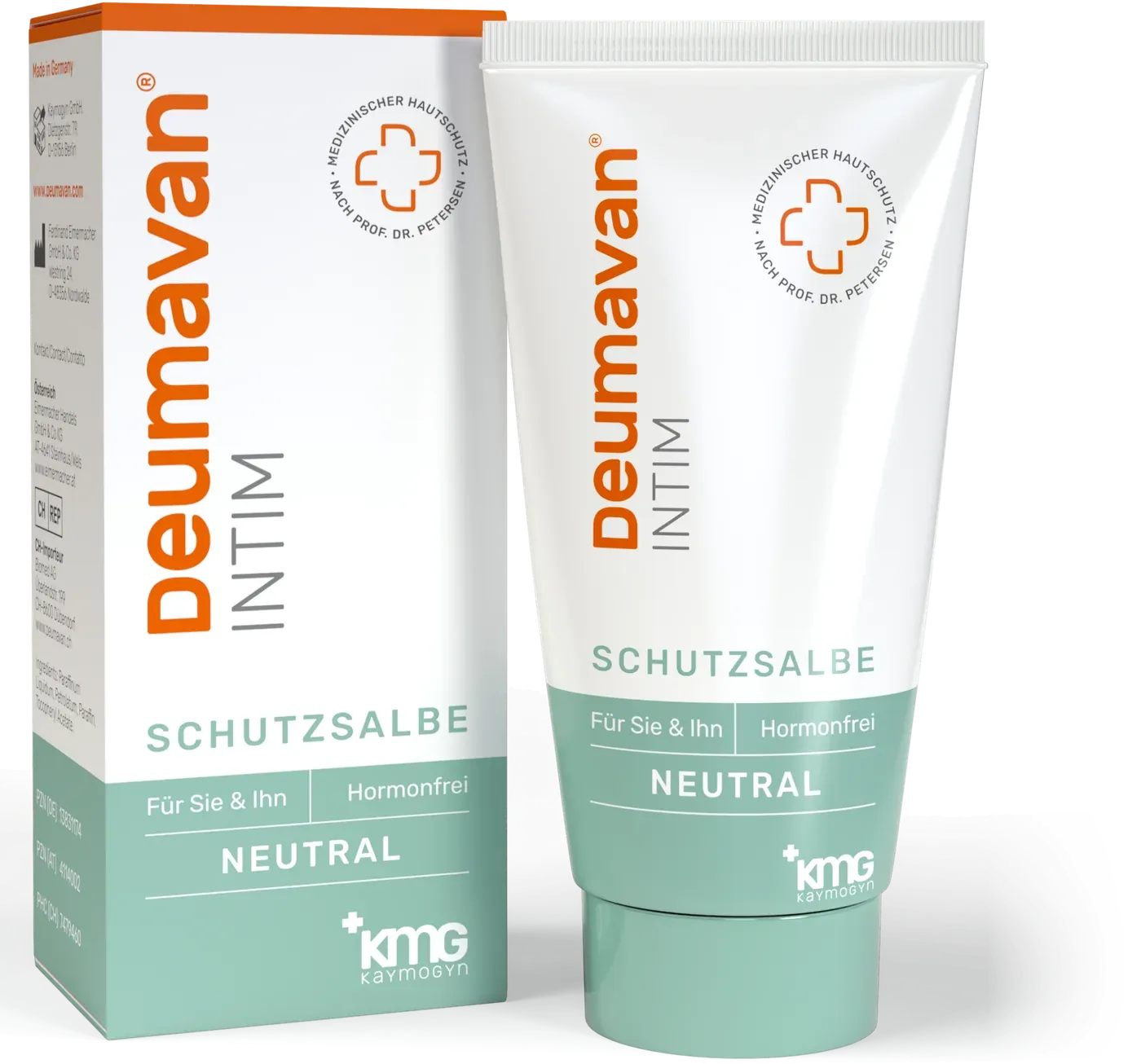
Medical device
Deumavan Protective Ointment Neutral
- For her and him
- hormone-free
- medical skin protection for the genital area
- preservative-free