
Intimate discomforts
Menopause: Often associated with dryness in the intimate area
Hormonal changes transform the body

Although menopause (climacteric) can significantly impact quality of life (but does not have to), it is not a disease. On the contrary, it is a natural phase in a woman’s life, and the associated symptoms can be well managed if necessary.
Menopause: Every woman experiences it differently
During menopause (climacteric), a woman’s fertile phase comes to an end. To achieve this, the ovaries gradually stop producing the female sex hormones estrogen and progesterone. Signs of this include irregular, shorter, or longer menstrual cycles, as well as heavier or lighter bleeding. Sooner or later, this leads to the final menstrual period, known as menopause. Often, the increasing hormone deficiency leads to other menopausal symptoms years before and even years after, especially hot flashes, night sweats, sleep disturbances, and mood swings. These symptoms usually subside once the ovaries completely stop hormone production and menopause is complete.
Menopause can last around ten years, but it can also be significantly shorter or longer. The type and severity of symptoms experienced during this time vary greatly from woman to woman. Some women may not even notice the hormonal changes.
Menopause and dryness in the intimate area
The vagina and vulva are dependent on estrogen. The hormone deficiency that occurs during menopause leads to typical tissue changes that can cause problems later in life:
- Vagina: With the onset of menopause, the vaginal wall becomes thinner, less elastic, and more susceptible to injury. Additionally, it produces less secretion, leading to dryness of the mucous membrane. The activity of the Bartholin’s glands also decreases.
- Vulva: The delicate intimate skin also becomes thinner and more vulnerable with the onset of menopause. Additionally, the many sebaceous and sweat glands in the intimate skin become less active, making the skin dry and less resilient. Medically, this is referred to as a damaged skin barrier. Typical symptoms include burning, itching, and soreness of the vulva. Furthermore, the damaged intimate skin can react extremely sensitively to mechanical stress (e.g., during sex, from tight underwear, or rough toilet paper) and may suffer small injuries (microtears). Women whose skin is already dry and/or very sensitive due to a chronic condition are at increased risk for these issues.
During and after menopause – Other consequences of hormone deficiency
Other organs are also dependent on female sex hormones, which explains why menopause can increase the risk of osteoporosis and bladder function disorders.
Navigating menopause with ease – Here’s how!
Menopausal symptoms, even severe ones, can be well treated today. The treatment should be discussed with a gynecologist, who will tailor the medications and other measures to the existing symptoms and take into account a woman’s personal preferences (e.g., hormone replacement – yes or no).
However, there is much more to well-being during and after menopause: a healthy and active lifestyle, as well as careful and gentle intimate hygiene—such as with Deumavan Washing Lotion and Deumavan Protective Ointment. Applied daily to the vulva, Deumavan Protective Ointment can protect the delicate and dry intimate skin during and after menopause. This can alleviate, completely eliminate, or even prevent intimate discomfort. The partner can also contribute significantly by ensuring that their own genital area is well cleaned and cared for.
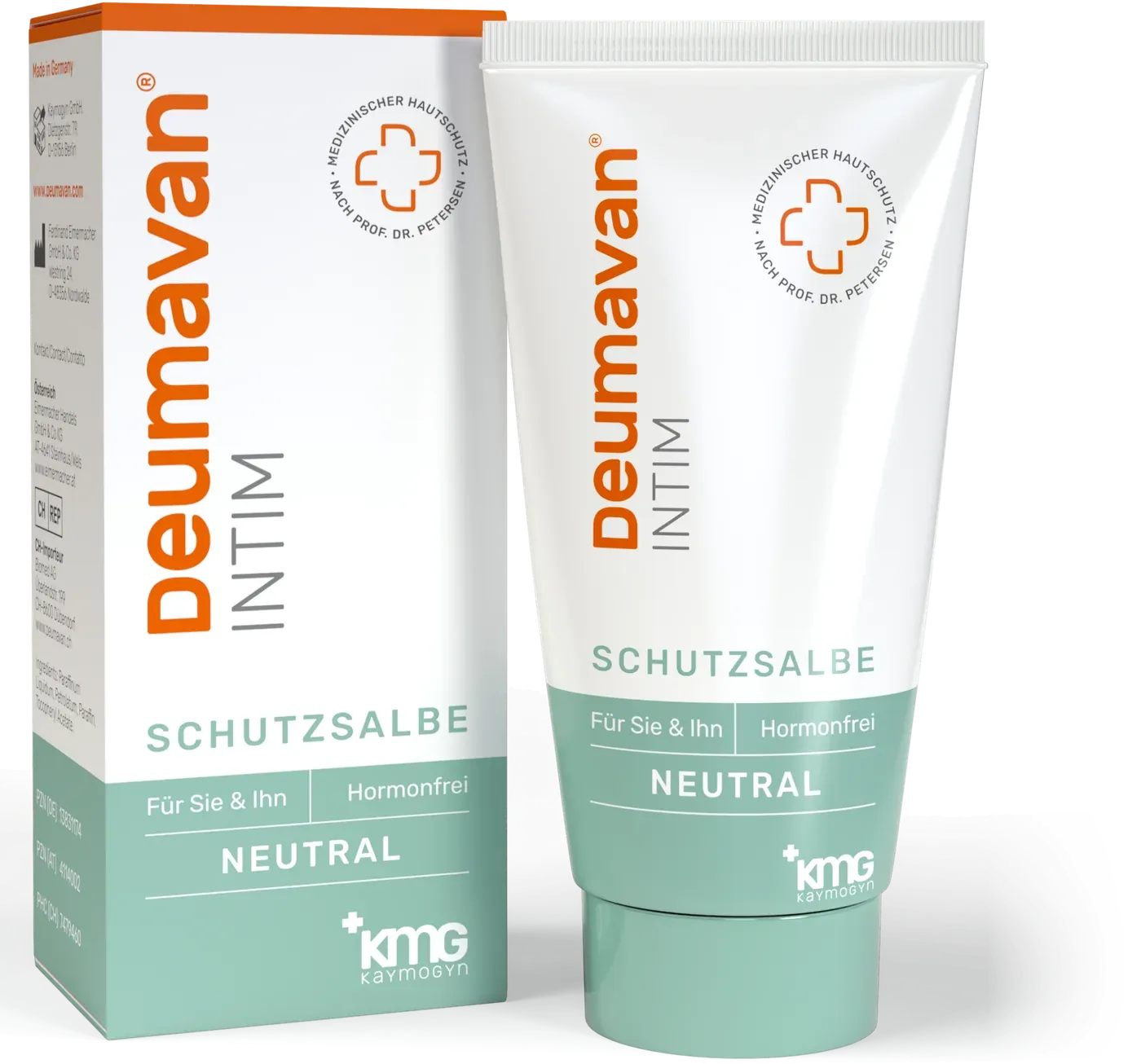
Medical device
Deumavan Protective Ointment Neutral
- For her and him
- hormone-free
- medical skin protection for the genital area
- preservative-free